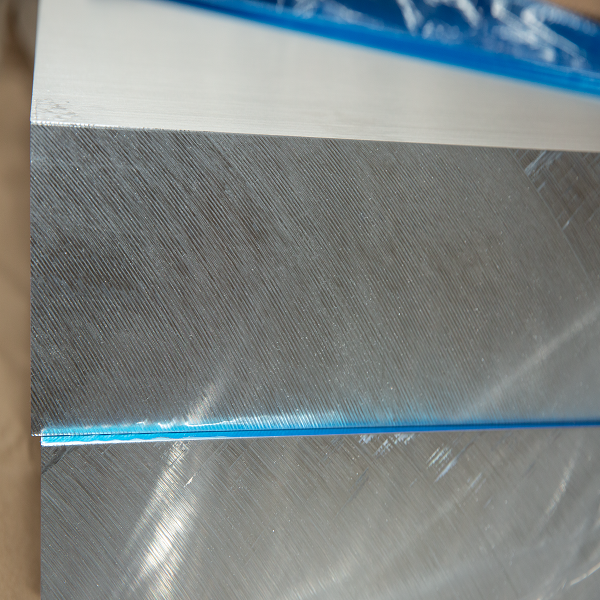
If you are an Indian importer of aluminum plates, sheets, you have likely encountered the term BIS certification. Understanding what BIS is, why it matters for your imports, and which documents you need to clear customs is essential to avoid delays, fines, or consignment rejections. This article provides a practical overview.
What Is BIS?
BIS (Bureau of Indian Standards) is India‘s national standards body, operating under the BIS Act, 2016. Its primary functions include formulation of Indian Standards (IS), product certification, and mandatory quality control for specified products.
For imported goods, BIS certification is enforced through the Foreign Manufacturers Certification Scheme (FMCS). Under this scheme, a foreign manufacturer must obtain a BIS license and affix the ISI Standard Mark on their products before those products can be legally sold or distributed in India.
Why Is BIS Certification Mandatory for Aluminum Plates?
On March 13, 2026, the Government of India issued the Aluminium and Aluminium Alloy Products (Quality Control) Order, 2026 under Section 16 of the BIS Act, 2016. This Quality Control Order (QCO) makes BIS certification mandatory for 17 categories of aluminum products, including aluminum sheets, plates, and strips.
Without BIS certification, you will face:
- Customs detention – Your shipment will not be cleared.
- Rejection or re‑export – You may be forced to send the goods back.
- Fines and legal action – Under the BIS Act.
- Commercial losses – Delayed projects, unfulfilled client orders, and storage costs.
The order is designed to ensure that all aluminum plates sold in India – whether locally made or imported – meet minimum quality, safety, and performance standards.
6061 Aluminum Plates – Structural Alloy for General Engineering
Which Aluminum Products Are Covered?
The QCO applies to the following important categories for importers:
| Indian Standard (IS) | Product Covered |
|---|---|
| IS 736:1986 | Wrought aluminium and aluminium alloy sheet and strip for general engineering purposes |
| IS 734:1975 | Wrought aluminium and aluminium alloy plate for general engineering purposes |
| IS 737:2008 | Wrought aluminium and aluminium alloy sheet and strip (revised) |
| IS 733:1983 | Wrought aluminium and aluminium alloy bars, rods, and sections |
| IS 21:1992 | Electrical grade products (plates, sheets, bars, tubes, etc.) |
The most relevant for aluminum plate and sheet importers are IS 736 (for sheet/strip) and IS 734 (for plate).
What Does This Mean for You as an Importer?
As an importer, your responsibility is not to obtain the BIS license yourself. The license belongs to the foreign manufacturer under the FMCS. However, you are responsible for ensuring that:
- The manufacturer holds a valid BIS license for the specific product and Indian Standard.
- The product bears the ISI Standard Mark.
- The shipment is accompanied by the proper documentation to prove BIS compliance.
If your overseas supplier does not have BIS certification, you cannot legally import those aluminum plates into India after the deadline.
Even if the QCO has been issued, there are transition periods. For the new Aluminium and Aluminium Alloy Products (Quality Control) Order, 2026 (S.O. 1319(E)), general enterprises must comply by December 1, 2026; small enterprises have a later deadline of March 1, 2027; and micro enterprises must comply by June 1, 2027
6082 Aluminum Plates – High-Strength Alloy for Heavy-Duty Fabrication
Required Documents for Customs Clearance (BIS‑Related)
To clear your aluminum plate shipment through Indian customs, you will typically need the following documents related to BIS:
| Document | Description / Purpose |
|---|---|
| BIS License (foreign manufacturer) | A copy of the valid BIS license (FMCS) held by the manufacturer, showing product category and applicable IS standard. |
| Mill Test Certificates (as per IS standard) | Test reports from a BIS‑approved laboratory or from the manufacturer‘s in‑house lab, confirming the product meets the relevant Indian Standard (e.g., IS 736). |
| ISI Mark Declaration | A self‑declaration from the importer or manufacturer that the product bears the BIS Standard Mark as required. |
| Commercial Invoice (with BIS reference) | The invoice should clearly describe the product, alloy, temper, dimensions, and mention the BIS license number or ISI Mark. |
| Packing List | Must show batch/lot numbers that correspond to the test certificates and the BIS‑marked products. |
| Bill of Lading or Airway Bill | Standard shipping document – must be consistent with the above. |
| Import License (if applicable) | Some HS codes may require an import license; check with DGFT. |
| Certificate of Origin | May be required for claiming preferential duty under trade agreements (e.g., India‑ASEAN FTA, India‑Korea CEPA, or other applicable treaties). |
Exceptions
The QCO does not apply to:
- Products manufactured in India for export only.
- Imports up to 200 kg per year for R&D purposes, provided they are not sold commercially and are disposed of as scrap.


5083 Aluminum Plates – Marine-Grade Alloy for Coastal and Offshore Applications